“Russian rap: new ‘Old’ School”
A portrait series dedicated to the people who shaped the musical taste of teenagers in the 2010s.
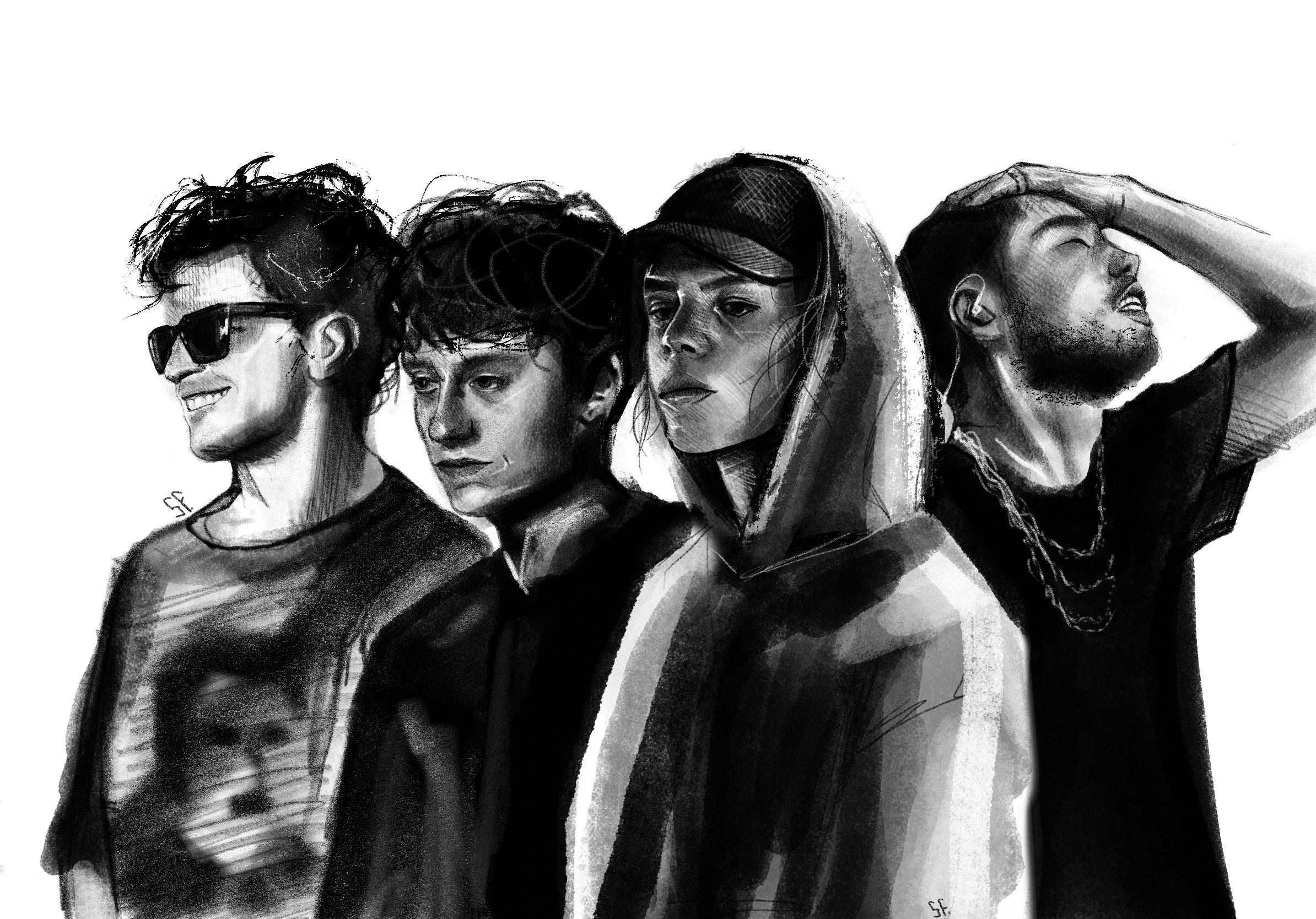
Who Taught Russian Rap to Be Sad?
How the generation of “internet rappers” turned melancholy into the defining creative language of an era
Until the mid-2010s, Russian rap mostly lived by the old rules of the old school: battles, punchlines about money and status, a cult of strength. 2015 is generally considered the turning point of the era — that’s when albums came out, almost simultaneously, that overturned what the genre could be.
In 2015, Skriptonit released Dom s Normal’nymi Yavleniyami (“A House With Normal Phenomena”), in which rap dissolved into a weary, hoarse intonation. Adil sounded fresh and offhand at the time — he didn’t so much rap as mutter, half-singing lines and creating an atmosphere of exhaustion, alcohol, and one-night flings. Mentally, he gave listeners a chance to live inside the track, in that exact place, with those exact sensations. The album almost immediately made Skriptonit one of the leading voices in Russian-language hip-hop.
That same month, in July 2015, LSP released Magic City — a tragic, neon-lit story in which the lyrical protagonist stands face to face with lust, money, and the grime of nightclubs. It was the debut installment of the trilogy, beginning at a strip club. From the intro onward, the protagonist sinks into a vivid illusion of pleasure, gradually being pulled into a deeply destructive story. Beneath the surface glitter, sex, and easy money, a sense of inner fracture becomes increasingly visible.
Tracks from these albums played in clubs, from speakers at afterparties, in the headphones of schoolkids on their way to class. This literary novelty taught the mass listener that rap didn’t have to boast — it could genuinely ache. Each artist added their own shade, filling out a picture broad enough to fit different moments of a person’s life.
At the same time, another branch of melancholy was growing, one that came to be called cloud rap. Its pioneers in Russia are now widely considered to be the Ufa-based rapper Boulevard Depo, alongside a then-young Pharaoh.
Even before the “new school” emerged, Boulevard Depo had staked out a hazy, half-asleep sound, and it struck a chord with audiences. In 2014, he founded the collective YungRussia, and later released the now-iconic tracks “Rapp” and “Otricala.” He later recorded “Champagne Squirt” with a then still-obscure Pharaoh.
Pharaoh took this aesthetic and turned it into a cult phenomenon: slow beats, a floating, deliberately languid and occasionally aggressive flow, depressive and philosophical lyrics — and within a couple of years his name was everywhere. Meme pages were sampling his now-iconic “skr skr skr, ” and the music video for “Black Siemens” racked up millions of views. The image of a misanthropic artist who almost never appeared in public grew thick with rumors, and his style shifted from “Fosfor” to “Pink Phloyd.”
Neither of them had any idea that, in the future, they’d be trying to shake off the “cloud rapper” label — and neither realized just how much influence they actually had on the music industry. The next wave of young artists inherited this slow flow and introspection.
Audiences coming of age after the 2014 crisis didn’t see themselves in a triumphant hero, but in a tired, anxious “little man” unsure of the future. The lyrics resonated precisely because they described not some abstract “street, ” but a thoroughly recognizable reality of residential suburbs and small towns. Rappers of this wave openly rejected the old-school brutality in favor of vulnerability. Admitting to weakness, anxiety, addiction, or confusion became fashionable.
By 2017, melancholy had stopped being a side mood confined to individual albums and had become the fully-fledged language of an entire generation of Russian rap. It wasn’t brought about by a single figure, but by several artists at once, each with a different tone.